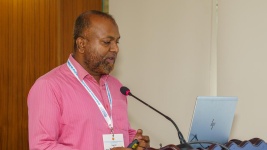
Md Shamsuddin
md.shamsuddin@my.jcu.edu.au
Recipient of an AIMS@JCU Scholarship
PhD
College of Science and Engineering
Md Shamsuddin
md.shamsuddin@my.jcu.edu.au
PhD
College of Science and Engineering
Comparative chemical risks of plasticiser leachates from conventional and biodegradable microplastics on aquatic trophic networks
Md Shamsuddin is a fisheries and marine science professional from Bangladesh with a strong academic and research background. He holds a Master of Marine Biology with Distinction from James Cook University, where his High Distinction thesis focused on microplastic ingestion and gastrointestinal transit in fish. He also earned an MS in Aquaculture and a B.Sc. in Fisheries with Honours, consistently ranking among the top of his cohorts. Over the past decade, Shamsuddin has worked at the Department of Fisheries Bangladesh, gaining extensive experience in sustainable aquaculture, aquatic resource management, and environmental monitoring. His professional and research experiences, combined with international training and peer-reviewed publications, reflect his commitment to scientific excellence and practical application in marine and aquaculture systems.
Comparative chemical risks of plasticiser leachates from conventional and biodegradable microplastics on aquatic trophic networks
2026 to 2030
Project Description
This project will investigate the health and environmental risks of plasticiser leachates from conventional and biodegradable plastic polymers, focusing on their leaching kinetics, bioaccumulation potential, sublethal toxicity, trophic transfer and biomagnification in fish. While conventional polymers (e.g., Polystyrene, PS) are persistent and harmful, biodegradable polymers (e.g., Polylactic Acid, PLA) are considered more sustainable alternatives. However, both polymer types contain plasticisers, many of which can leach into aquatic environments and may bioaccumulate in organisms, potentially causing adverse effects. Despite growing awareness of plastic pollution, the chemical hazards of microplastics, their associated plasticisers and the plasticiser leachates themselves remain poorly understood. To address this knowledge gap, controlled experiments will simulate marine and brackishwater aquaculture conditions using four treatments: the conventional polymer PS containing the conventional plasticiser Di(2-ethylhexyl) phthalate (DEHP); PS with the bioplasticiser Acetyl tributyl citrate (ATBC); the bioplastic PLA containing DEHP; and PLA containing ATBC. Using imaging, spectroscopic, chromatographic, and high-sensitivity analytical techniques alongside liquid–liquid extraction, the study will evaluate the (bio)plasticiser leaching dynamics and assess tissue-specific bioaccumulation and biomagnification. Biomarkers, including molecular (e.g., metabolites and proteins), cellular and behavioural analyses, will determine sublethal and ecological impacts. This study will reveal and compare the chemical risks associated with (bio)plasticiser leachates from conventional and biodegradable microplastics, informing risk assessments and regulatory development for the sustainable management of aquaculture and marine ecosystems.
Project Importance
This project is important because it addresses critical gaps in understanding the environmental and health risks of plasticiser leachates from conventional and biodegradable microplastics in aquaculture systems. By quantifying leaching dynamics, bioaccumulation, tissue-specific distribution, sublethal effects, and trophic transfer in a commercially important species, Barramundi (Lates calcarifer), the study will provide essential data for risk assessment and regulatory decision-making. The findings will inform sustainable aquaculture practices, improve seafood safety, and contribute to the protection of marine ecosystems and public health, particularly in the context of growing plastic pollution and the adoption of biodegradable plastics as alternatives to conventional polymers.
Project Methods
This project will adopt a multidisciplinary approach involving four controlled experiments under simulated conditions to compare the risks of CPPs (e.g., PS) and BPPs (e.g., PLA) combined with conventional (e.g., DEHP) and bio-based (e.g., ATBC) plasticisers.
1. Plasticisers leaching kinetics
Conventional and bio-based plasticisers will be incorporated into selected pure CPPs and BPPs to create microplastic-additive blends. These will be morphologically characterised using imaging techniques (e.g., Scanning Electron Microscopy (SEM)), and chemically confirmed through spectroscopic methods (e.g., Fourier Transform Infrared Spectroscopy (FTIR)). Plasticiser concentrations will be also quantified, using for example chromatographic techniques (e.g., Gel Permeation Chromatography (GPC)) following established calibration protocols. The plasticised MPs will then be incubated in seawater and brackishwater under environmentally relevant conditions. Incubation water will be periodically collected and chemically analysed to quantify the plasticiser release for using appropriate methods (e.g., Gas Chromatography-Mass Spectrometry (GC-MS)). A suitable numerical model will be fitted to quantify leaching rates and compare additive release between polymer types.
2. Bioaccumulation and tissue distribution of plasticisers in fish
Using optimal polymer–plasticiser combinations from Experiment 1, bioaccumulation and organ-specific plasticiser distributions will be assessed in L. calcarifer. Fish will be exposed to the MPs for ~35 days under marine and simulated brackish aquaculture conditions through waterborne and dietary exposure routes, with treatments comprising: (1) conventional plasticiser-blended CPPs (marine), (2) bioplasticiser-blended CPPs (marine), (3) conventional plasticiser-blended BPPs (brackish), (4) bioplasticiser-blended BPPs (brackish). Exposure concentrations will follow literature benchmarks. Plasticiser–blended MPs will be prepared as in Experiment 1. Post-exposure, fish will be euthanised and tissues (e.g., liver, muscle, gut or gonads) collected for plasticisers extraction using an appropriate liquid–liquid extraction procedure. Extracted analytes will then be quantified using high-sensitivity analytical techniques. Bioaccumulation factors and tissue distribution ratios will be calculated.
3. Sublethal toxicity responses
Using the same exposure conditions as Experiment 2 (i.e., combination of plastic and plasticiser and exposure concentrations), acute (~7 days) and chronic (>35 days) sublethal toxicity will be evaluated in L. calcarifer. Biomarkers of oxidative stress (e.g., catalase), inflammatory cytokines (e.g., TNF‑α), and neurotoxicity markers (e.g., acetylcholinesterase activity) will be quantified in target tissues (liver, muscle, gut or gonads) using established immunoassay and spectrophotometric techniques. Additionally, metabolomic profiling through metabolomic approaches (e.g., GC-MS) will be used to detect and quantify plasticisers. Behavioral endpoints (e.g., feeding activity) will be monitored using video analysis.
4. Trophic transfer and biomagnification
Using exposure conditions consistent with Experiment 2, this study will assess the trophic transfer and biomagnification potential of plasticisers. Artemia spp. (prey) will be exposed to plasticiser–blended MPs for a literature-informed duration (e.g., 48 h), then fed daily to L. calcarifer (predator) for ~35 days. Plasticiser concentrations in experimental organisms will be determined following extraction and analytical protocols outlined in Experiments 2 and 3. Trophic Transfer and Biomagnification Factors will be calculated to compare plasticiser accumulation across trophic levels.
Data analyses will integrate numerical simulations (e.g., leaching kinetics) with statistical tests to assess differences across treatments. Multivariate analyses will be employed to synthesise biochemical and behavioural datasets.
Project Results
This project is expected to deliver critical new insights into the chemical risks of conventional and biodegradable microplastics in aquatic ecosystems. It aims to quantify plasticiser leaching, bioaccumulation, and tissue-specific toxicity in Lates calcarifer, and determine trophic transfer and biomagnification within simplified marine and aquaculture food webs, including Artemia spp. and Lates calcarifer. The most significant anticipated outcome is the creation of the first comparative dataset on additive-related risks from conventional and biodegradable microplastics under realistic tropical conditions. These findings are expected to advance understanding of contaminant pathways and ecosystem-level consequences, providing evidence-based guidance for sustainable aquaculture, seafood safety, and regulatory frameworks addressing emerging plastic pollutants.
Keywords
Aquaculture,
Behaviour,
Benthic,
Biostatistics,
Cetaceans,
Chemical ecology,
Climate change,
Controlled Environment,
Coral reefs,
Corals,
Crustaceans,
Deep sea,
Demersal,
Ecology,
Economic development,
Field based,
Fish,
Interaction,
Intertidal,
Management tools,
Mangroves,
Mariculture,
Marine planning,
Modelling,
Monitoring,
Oceanography,
Pelagic,
Plankton,
Pollution,
Qualitative techniques,
Quantitative marine science,
Sharks / Rays,
Shellfish,
Social interactions,
Soft bottom,
Turtles
Supervised By:
Marina F. M. Santana (AIMS)